ANSWER: Compost that is not completely finished, can potentially burn your lawn or plants with compost’s organic materials, but it is unlikely in small amounts. However, too much composted cow manure on your lawn can definitely burn the grass because of its high nitrogen levels. Unfinished compost can also burn sensitive seedlings.
QUESTION: Is urine good for compost? I heard it speeds things up. – Rick M
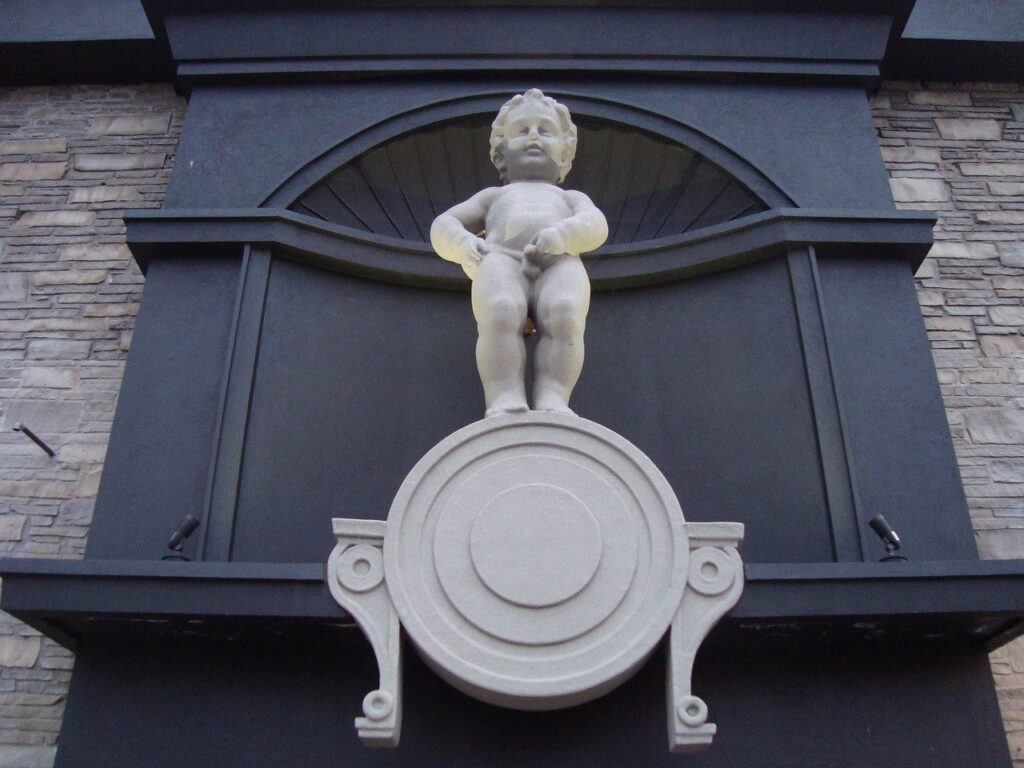
ANSWER: Yes, as funny as it may sound, human urine is rich in nitrogen and should actually be added to compost regularly instead of flushing down the toilet, which is also a waste of water resources. Peeing on your compost is good for both the compost you are creating, and the environment itself.
Using chemical fertilizers to add nitrogen to the soil is bad for the environment and can be detrimental to our health as well. Widespread fertilizer use leads to algal blooms, oceanic dead zones, contaminated drinking water and several human health problems, and chemical fertilizer use could be cut down drastically if people started fertilizing their soil and compost with their own nitrogen-rich urine instead of chemical fertilizers.
Peeing on your compost is not only good for the soil and good for the environment, but it can actually increase crop yields and replace fertilizers entirely. So, next time you need to urinate, go on a compost pile instead of wasting your nitrogen-rich resources by flushing it down the toilet. Alternatively, pee in a bucket and toss it on your compost when you can. Just don’t keep flushing it away. If you have a garden and a composting system, your golden liquid is pretty much liquid gold.
QUESTION: How can I compost without attracting rats? I want to get started, but I really hate the idea of rodents. – Mitchell B
ANSWER: Rats or mice or other rodents could potentially get into your compost for several reasons. If you use your composting system to recycle kitchen trash, it provides rats with a food source. If your compost is creating strong odors, it is especially susceptible to rat infestations.
Properly balanced compost should never smell bad. If your compost is stinking, it is likely a sign that you need to add more brown materials to the mixture. You can also bury your food scraps better under a thick layer of brown materials when adding them to the pile.
You may also want to turn your pile more frequently to keep your pile hot and decomposing at a fast rate. Properly functioning compost piles are a good heat source, so If it’s cold outside in your area, rats may be attracted to your compost pile just because of its warmth. Compost bins are usually kept in dark, tucked away locations, which rodents tend to be very fond of as well.
Thankfully, there are a few simple preventative tactics that you can implore to rat-proof your compost bin and keep rats away from your compost, and out of your garden area in general. First, use a solid-sided container as your compost bin. If you are using a wooden, open-slatted bin for composting, switch to only using it for garden waste and keep your kitchen scraps and vegetable peelings in a closed bin with solid sides and a well-fitting lid instead.
The majority of commercial compost bins are made to be pest resistant, with a thick rodent-proof base. However, if yours doesn’t have a rat-proof base, place it onto a galvanized light welded wire mesh that is at least ½ inch by ½ inch thick so that rats can’t squeeze through the holes or chew through the material. Set the bin up squarely, ensuring that there is no gap between the sides and the lid and keep an eye out for holes in the plastic.
Rats hate being stuck out in the open, and always attempt to stick to the sides and edges of buildings or pathways where they have some security and a protected passage to scurry across. Place your compost bin or pile right out in the open, as far away from fences, sheds, and structures as possible to discourage them by giving them no place to hide near your compost to take them out of their comfort zone.
Rats also hate loud noises and surprises. So place your compost bin in a location that you pass by regularly and use a stick to whack the side of the bin loudly every time you pass it by. This will make them think twice about setting up home base in your compost heap.
Look around your garden and try to eliminate places where rodents can easily hide, such as tall grass, or wildflower meadows. While ornamental grasses and wildflowers may look nice in your garden, they can be a hotbed for rodents.
If you don’t want to remove your tall grasses and wildflower meadow areas, then make sure your compost bin is far away from them. Birds are messy eaters and can easily leave enough seed on the ground to keep a few rodents well fed. If you have a birdfeeder, put a slab of pavement or some sort of flat surface beneath it so that you can easily sweep up fallen seeds so that they don’t attract hungry rats.
Lastly, watch what you put into your compost. Avoid adding any cooked food, especially meat or fish products, or anything that is particularly strong-smelling like cheese and fats to your compost bin.
Eggshells seem to be a personal favorite for rodents though, so be sure to keep them out of your compost, and if you’re going to use them in the garden for any reason, such as to deter slugs and snails, be sure to wash them well first, removing any trace of egg residue. If you successfully carry out several of these rat-proofing measures, most likely, the rats in your area will move on to less hostile environments.
QUESTION: Does urine speed up composting? My husband says he should pee in the compost pile and it will make better compost, but that’s disgusting! – Angela R
ANSWER: Yes, unbelievably, human urine is rich in nitrogen and should be added to compost regularly instead of flushing down the toilet. Peeing on your compost is good for both the compost you are creating, and the environment itself. Using chemical fertilizers to add nitrogen to the soil is bad for the environment and can be detrimental to our health as well. Widespread fertilizer use leads to algal blooms, oceanic dead zones, contaminated drinking water and several human health problems, and chemical fertilizer use could be cut down drastically if people started fertilizing their soil and compost with their own nitrogen-rich urine.
No, this is not a joke, as funny as it may sound. Peeing on your compost is not only good for the soil and good for the environment, but it can actually increase crop yields and replace fertilizers entirely. If you make biochar and pee on it, you are creating an all natural, long-lasting plant feeding system. Or use the ashes from your woodstove and pee on that instead of biochar, which is also a great plant food combination. If urine and ash or biochar can replace fertilizer entirely, imagine what urine and compost can do.
Recent field studies support the benefits of peeing on crops. A Nepalese study found that sweet peppers that are fertilized with human urine and compost yield the most fruits and tallest plants of the eight different fertilizer combinations used in the study.
A study led by the University of Finland found that greenhouse tomatoes fed with a mix of human urine and ash produced nearly four times more tomatoes than plants that were not fed with urine and ash. A single adult male could provide enough pee to fertilize 6,300 tomato plants per year, yielding 2.4 tons of tomatoes. If peeing on crops can replace the need for fertilizer, peeing on compost could do the same.
Nepalese farmers have been taking a leak on their crops for centuries. In Japan and China, human feces was used as a traditional fertilizer up until World War II in Japan and until the 1960’s in China, though using human manure is not recommended, thankfully, ugh.
Though there have been some concerns raised about possible issues with hormonal or pharmaceutical residues in human urine but compost, if maintained correctly, gets hot enough to burn off any potentially harmful residues present in human urine. Yet, despite the incredible results of recent studies, Americans are peeing away enough nitrogen to feed 12 million acres of corn per year.
So, go tinkle on a compost pile instead of in the toilet. Or pee in a bucket and toss it on your compost when you can. Just don’t flush it away. If you have a garden and a composting system, your golden liquid is basically liquid gold.
QUESTION: Does a compost bin need a lid? I see some models have them, and others don’t. – Joanna C
ANSWER: As you’ve seen on the market, it’s not absolutely essential for your compost bin to have a lid—your compost materials will decompose with or without one. However, being able to cover your compost bin comes along with so many benefits that you really should put a lid on your compost. (If you don’t have a lid available, you can always use a tarp weighted with rocks or a piece of Hessian-backed carpet instead.) Here’s a list of the reasons it seriously benefits you to cover the top of your compost bin.
Controlling pests
A securely fitting lid is your first line of defense against rats, mice, opossums, raccoons, and all the various pest animals that would love to get into your compost bin for a smorgasbord. When the lid is closed and the compost bin is properly managed, all those food scraps inside shouldn’t even be on the local wildlife’s radar. Allowing some animals to enjoy a meal from your compost may not seem like such a big deal—it’s not like some little rodents will be able to consume enough of your materials to really put a dent in the pile, anyway—but with a consistent food supply like compost provides, those pest animals won’t just be occasional visitors. Also, assuming your compost bin is set up in close proximity to your home, it’s a good idea to keep pests as far away from where you live as possible. (After all, you know what they say: If you give a mouse a cookie … )
Managing moisture
It’ll take a whole lot longer to get from a heap of food scraps and garden debris to the final product without a lid on your compost bin simply because you won’t be able to effectively manage the moisture level of your materials. The hydration of your compost will be left up to the whims of Mother Nature and will depend on how rainy or sunny the weather is each day.
Your compost ingredients will still undergo the process of decay (eventually), but when things are too wet, excess water is slower to drain out of the bin, and oxygen has trouble circulating to help dry things off. When your ingredients are too dry, the microbes that do the work of decomposing your compost ingredients will slow down to a creep. The easiest way to adjust the hydration level in your compost is to prop up the lid when the materials get too wet so the sunshine can dry things out.
If you don’t have a lid, every time it rains, your compost ingredients will get soaked, and you’ll face the challenge of drying your compost out over and over again. Then, once you get the compost to the desired level of dampness, if you can’t close the lid to keep moisture inside, a sunny day will just dry things out again in short order.
In other words, without a cover on your compost, you won’t be able to adjust the moisture level of the materials inside the way you really need to. Even if your compost bin is located under an awning or inside a structure like a shed that will protect it from the elements, the process of adding the compost ingredients will also result in fluctuating hydration levels, and without a lid, your moisture management options will still be limited.
Addressing disagreeable odors
Even the most meticulously managed compost arrangement is bound to produce an unpleasant odor occasionally, as a result of too much moisture or too little oxygen. As with regulating the moisture level of your compost, addressing these stinky imbalances is easiest done with the help of a lid on your compost bin.
Regulating temperature
The temperature of your compost is directly linked to its health and how well it is functioning, and the outdoor temperature does affect the temperature of your compost, even when it’s heated up and really cooking. Without a lid on the bin, your compost materials are going to be exposed to the temperature variations of the great outdoors.
When you have the ability to close the lid over your compost, you’re creating a mini-ecosystem that has some protection from the elements and will have a more stable climate as a result. According to Cornell Cooperative Extension, “temperature is a key parameter determining the success of composting operations.”
Case in point: When the temperature gets too high, the fluctuation can result in the beneficial microbes that decompose your compost materials dying off. Another way temperature comes into play when you’re making compost is when it comes to reducing pathogens.
You need a five-day period with temperatures no lower than 104 degrees Fahrenheit (40 degrees Celsius), including a period of at least four hours when temperatures get above 131 degrees Fahrenheit (55 degrees Celsius) in order to significantly reduce the pathogens compost can otherwise contain, kill off fly larva, and take any weed seeds that have made their way into the compost out of commission. Without a lid, it’s difficult to manage the temperature so you can reap all these benefits.
Does a compost bin need a lid?
Once your compost has finished its decomposition process, you should put the lid on the container and leave it shut. Without the ability to do this, your compost will continue breaking down past its completion point, losing potency and becoming less effective the longer it’s exposed to the elements. Without a cover to preserve the completed compost, it will actually begin to seep into the soil underneath and around it, along with the nutrients that make it so valuable in the garden. Don’t let your months of effort creating that “black gold” go to waste and literally fade away simply because your compost bin doesn’t have a lid.
Speeding up the process
Compost that’s made in a container that has a cover is ready to use more quickly than compost made in a container without a cover. That’s because a covered container tends to hold more heat, and heat encourages the microbes that decompose your compost materials to work more quickly. Making your compost in a bin that has a cover can save you weeks or months, so your compost will be ready to fortify the plants in your garden more quickly, and you’ll get to see the rewards of your work that much faster.
Composting when it’s cold outside
Whether or not this point applies to you depends on the region where you live. In areas where the winters get chilly enough, compost piles eventually freeze through, and the work of the microbes that break everything down stops until temperatures warm up again in the spring. While you can’t do much about the weather in your part of the world, by using a cover on your composting container, you can keep the temperature inside the bin warm enough to keep your compost going in full swing all winter long, no matter how cold it may get outside.