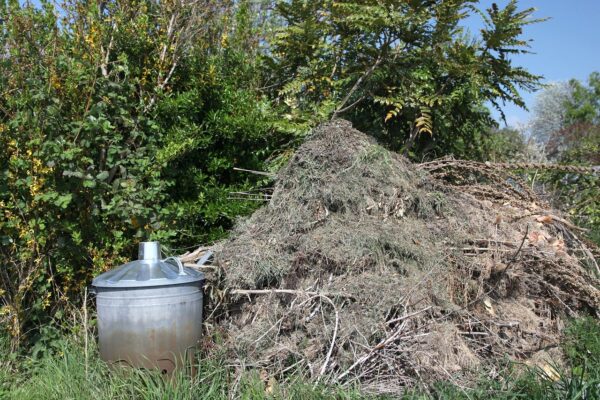
QUESTION: How do you accelerate compost? Our compost bin seems to take forever. I’d really like to actually use the compost faster.
ANSWER: Making your own compost is great because you can toss trash like leaf clippings and kitchen scraps into a pile and come out on the other side with nutrient-rich compost that can be added to your garden soil.
Depending on the size of the pile you create, what you throw in, and how often you tend to it, the composting process can take anywhere between three months to two years. If you need compost quickly, however, there are a handful of things you can do to speed along the process so that you can get your hands on some compost quicker than usual.
First, make sure that you size your pile correctly. Piles that are sized around three square feet and three feet high tend to get hotter quicker. A correctly proportioned pile can get up to 140 degrees F. The high temperatures are a result of rapid microbial action and a hot pile is a good sign that your microbes are performing their task of breaking down your compost at top speeds. Smaller piles and larger piles simply don’t heat up as quickly as a well-maintenanced pile that is sized correctly.
Stirring up the mixture manually will also do a lot towards speeding up the decomposition process. Microbes require oxygen to break down compost, and turning the materials in your pile once per week will help improve the air circulation and provide the oxygen that your microbes need to do their work quickly. If you are not able to turn the pile, you can aerate it by poking around in the pile using a pitchfork.
Another way to make sure that your compost is breaking down at a fast rate is to make sure that the mixture inside your compost pile is balanced properly. For speedy decomposition, your pile needs to have a carbon to nitrogen ratio of around 20:1. In other words, you should have twenty pounds of carbon-rich material for every one pound of nitrogen-rich material.
Carbon-rich materials include shredded paper, dry leaves, saw dust, corn stalks, and other typically brown compost materials. Nitrogen-rich materials include kitchen scraps, fresh cuttings from your garden, seaweed and alfalfa hay. You can also boost the speed of your pile’s decomposition by adding in an organic activator, such as Super Hot, which is made of nitrogen and micro-organisms that are hungry and ready to process lots of organic material into nutrient-rich humus.
Another key factor in speeding up your compost pile is making sure that moisture levels stay evenly damp throughout the pile at all times. Water is a key component to processing compost, but you only need a little bit to get the right moisture levels. Ideally, the pile should be slightly damp, but never soggy or waterlogged.
The more you shred the contents of your compost before adding them in, the faster the particles will break down. It makes perfect sense that smaller particles will decompose faster than larger ones. Use a knife or tear up kitchen scraps by hand before adding them into the compost. If you really want to speed the process up, you can even use a blender to process your kitchen scraps before adding them to the pile.
Use a leaf shredder or your lawnmower to chop up fallen leaves before adding them into the mix. The microbial activity can be improved by adding in nitrogen-rich manure, however, some new strains of bacteria have caused people to move away from adding in manure. Alfalfa meal and soybean meal can be added in instead for a high-nitrogen alternative with no risk of spoiling the pile with bacteria.